
What You Need to Know About Asparagus for Dogs
Overview
Asparagus can be a safe and nutritious treat for your furry family members, offering health benefits such as improved digestion and a boost in essential vitamins. It’s important to understand that proper preparation is crucial to ensure your pet’s well-being.
- Cooking and portion control can help prevent gastrointestinal issues, allowing your dog to enjoy this delightful vegetable safely.
- Additionally, consulting a veterinarian before introducing new foods into your dog’s diet is a nurturing step that provides peace of mind.
Your pet deserves the best, and taking these precautions ensures a happy and healthy life.
Introduction
Asparagus, a vibrant and nutritious vegetable, isn’t just a favorite among humans; it can also be a delightful treat for your furry family members. Rich in essential vitamins and fiber, this green spear offers numerous health benefits, from aiding digestion to boosting immunity.
However, as a caring pet owner, it’s important to navigate the complexities of safe preparation and appropriate portion sizes to avoid potential risks.
Can your beloved dogs truly enjoy asparagus without adverse effects, or is there more to consider before adding this wholesome vegetable to their diet?
Let’s explore this together, ensuring a nurturing environment for your pets.
Understanding Asparagus: Definition and Characteristics
Asparagus (Asparagus officinalis) is a perennial flowering plant from the Asparagaceae family, cherished for its edible shoots. Known for its long, slender spears, asparagus is typically green but also appears in delightful purple and white varieties. This vegetable, known as asparagus for dogs, is low in calories and packed with essential vitamins A, C, E, and K, along with folate and fiber, making it a nutritious addition to the diets of both humans and their furry family members. Its unique texture and flavor can be quite appealing to canines, especially when prepared with care.
Asparagus for dogs is safe for our canine companions and can provide various health benefits, including supporting digestive wellness due to its high fiber content. However, moderation is vital; too much can lead to gastrointestinal upset, including gas and diarrhea. To ensure your dog enjoys this vegetable, proper preparation is essential. Cooking asparagus without harmful additives like butter, oil, or salt enhances its digestibility and nutritional value. When served in small, bite-sized portions, this vegetable can become an enticing snack for your dog, contributing to a balanced diet that includes a variety of greens.
It’s important to remember that while asparagus is safe for dogs, the ferns of the plant are poisonous and should be kept out of reach. As a responsible pet owner, consulting your veterinarian before introducing any new food into your dog’s diet is always a wise choice, especially if your pet has food sensitivities. Research indicates that asparagus for dogs can be safely enjoyed as an occasional treat, providing vital nutrients that support their overall well-being.
Here are some recommended portion sizes for canines:
- Extra-small canines (2-20 pounds) = 1 teaspoon
- Small canines (21-30 pounds) = 2 teaspoons
- Medium canines (31-50 pounds) = 2-3 teaspoons
- Large canines (51-90 pounds) = 1-2 tablespoons
- Extra-large canines (91+ pounds) = 2-3 tablespoons
Remember, treats like green vegetables should only make up about 10% of your dog’s overall nutrition. By nurturing your pet’s diet with thoughtful choices, you contribute to their health and happiness.

Health Benefits of Asparagus for Dogs
Asparagus for dogs offers numerous health advantages for our furry family members, making it a wonderful addition to their diet when prepared with care. This delightful vegetable is rich in fiber, which aids digestion and promotes regular bowel movements, helping to prevent gastrointestinal issues that can concern pet owners. The antioxidants found in asparagus for dogs play a crucial role in combating oxidative stress, thereby supporting overall health and vitality in our beloved canines.
Moreover, essential vitamins such as A, C, and K contribute significantly to a robust immune system, enhance vision, and promote healthy skin and coat. Folate, another vital nutrient present in asparagus, supports cellular function and growth, making it especially beneficial for developing dogs. However, it’s important to be mindful that raw asparagus can pose a choking hazard due to its tough and stringy texture. Therefore, it should be cooked and cut into small, bite-sized pieces before serving.
While small amounts of cooked asparagus are safe and can be a delightful treat, excessive consumption may lead to gastrointestinal upset. Pet owners should be attentive to portion sizes based on their dog’s weight. Additionally, asparagus can cause flatulence and may lead to strong-smelling urine, which is something to consider. It’s crucial to remember that the inedible fern is toxic to dogs and should be avoided entirely. When presented in moderation, asparagus for dogs can be a healthy and enjoyable snack that enhances a balanced meal for your cherished pet.

Risks and Safety Considerations When Feeding Asparagus to Dogs
Asparagus for dogs can be a nutritious addition to your furry family members’ diet, but it’s important to keep crucial safety considerations in mind. The raw vegetable is tough and fibrous, making it challenging for dogs to chew and digest. This can lead to gastrointestinal issues, such as gas, vomiting, or diarrhea. Cooking asparagus for dogs softens its texture, making it easier for them to consume and enjoy.
Additionally, be sure to trim the tough ends of the stalks, as these can pose a choking hazard. When introducing any new food, including asparagus, do so gradually and monitor your dog for any adverse reactions. If your dog shows signs of distress after consuming it—like persistent vomiting or diarrhea—consult a veterinarian for guidance. Remember, moderation is key; asparagus should only supplement a balanced diet and not replace regular meals.
For example:
- Small dogs (2-20 pounds) can safely enjoy 1 teaspoon of asparagus.
- Medium dogs (31-50 pounds) can have 2-3 teaspoons.
Always prepare asparagus for dogs correctly, as Andrew Ehlert advises, to ensure it is safe for your dog. Plus, asparagus is packed with antioxidants and vitamins A, C, and K, which can support your dog’s overall health. By taking these steps, you can nurture your pet’s well-being while introducing them to new and healthy foods.

How to Safely Prepare and Serve Asparagus to Dogs
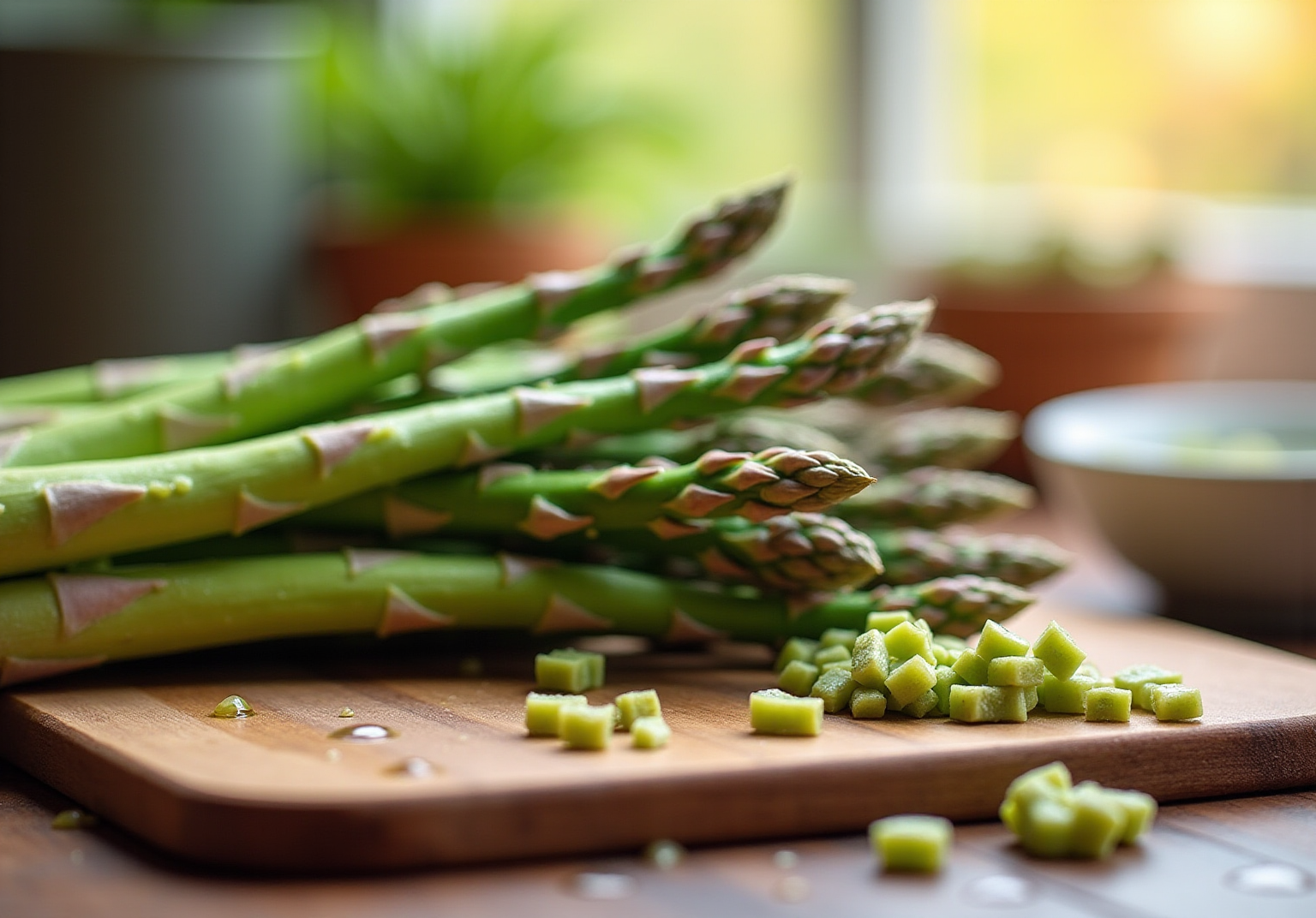
When it comes to preparing vegetables like asparagus for dogs, safety is paramount for your furry family members. Start by thoroughly rinsing the spears to remove any pesticides or dirt. It’s important to remove the tough ends, which are not safe for consumption, and slice the vegetable into small, bite-sized pieces to minimize choking risks, especially for our smaller pets.
Uncooked vegetables can lead to diarrhea and vomiting in dogs, so proper preparation is essential. Recommended methods for preparing asparagus for dogs include:
- Steaming
- Boiling
These techniques soften the vegetable while preserving its nutrients. Remember, it’s crucial to avoid adding any seasonings, oils, or butter, as these can be harmful to dogs. After cooking, allow the asparagus for dogs to cool completely before serving it as an occasional treat or mixing it into their regular food.
Treats, including vegetables like green stalks, should make up no more than 10 percent of a dog’s daily caloric intake. Additionally, be aware that feeding asparagus for dogs may cause a foul smell in a dog’s urine. Always consult a veterinarian before making any dietary changes for your beloved pet, ensuring a nurturing environment for their health and happiness.

Conclusion
Asparagus can be a nutritious treat for your furry family members, offering essential vitamins and fiber that contribute to their overall health. When introduced properly, this delightful vegetable can enhance their diet, bringing benefits such as improved digestion and a boost to their immune system. However, it’s vital to prepare asparagus correctly and serve it in moderation to prevent any potential gastrointestinal issues.
This article highlights several key points regarding asparagus for dogs, including its:
- Nutritional value
- Safe preparation methods
- Appropriate portion sizes based on a dog’s weight
It emphasizes the importance of cooking asparagus to make it easier for dogs to digest and to eliminate choking hazards. Additionally, pet owners are gently reminded to avoid feeding the toxic ferns of the plant and to consult with a veterinarian before making any dietary changes.
Ultimately, incorporating asparagus into your dog’s diet can be a delightful way to provide variety and essential nutrients. By being mindful of preparation techniques and portion control, you can ensure that your beloved companions enjoy this vegetable safely. Embracing such healthy choices not only enhances their diet but also fosters a happier, healthier life for your cherished pets. So, why not take a moment to consider adding this nutritious treat to their meals? Your furry family members will thank you for it!
Frequently Asked Questions
What is asparagus and what are its characteristics?
Asparagus (Asparagus officinalis) is a perennial flowering plant from the Asparagaceae family, known for its edible shoots. It typically has long, slender green spears but can also appear in purple and white varieties.
Is asparagus safe for dogs?
Yes, asparagus is safe for dogs and can provide various health benefits, including supporting digestive wellness due to its high fiber content.
What are the health benefits of asparagus for dogs?
Asparagus is low in calories and packed with essential vitamins A, C, E, and K, along with folate and fiber, making it a nutritious addition to a dog’s diet.
How should asparagus be prepared for dogs?
Asparagus should be cooked without harmful additives like butter, oil, or salt to enhance its digestibility and nutritional value. It should be served in small, bite-sized portions.
Are there any risks associated with feeding asparagus to dogs?
While asparagus is safe, the ferns of the plant are poisonous and should be kept out of reach. Additionally, moderation is crucial, as too much asparagus can cause gastrointestinal upset, including gas and diarrhea.
What portion sizes of asparagus are recommended for dogs based on their weight?
Recommended portion sizes are: – Extra-small canines (2-20 pounds) = 1 teaspoon – Small canines (21-30 pounds) = 2 teaspoons – Medium canines (31-50 pounds) = 2-3 teaspoons – Large canines (51-90 pounds) = 1-2 tablespoons – Extra-large canines (91+ pounds) = 2-3 tablespoons
How much of a dog’s diet should be made up of treats like asparagus?
Treats like green vegetables should only make up about 10% of a dog’s overall nutrition.
Should I consult a veterinarian before feeding asparagus to my dog?
Yes, it is always wise to consult your veterinarian before introducing any new food into your dog’s diet, especially if your pet has food sensitivities.